A Comprehensive Guide to Modern Cancer Care: Prevention, Early Diagnosis, and Advanced Therapies
An in-depth clinical guide to modern oncology, exploring cancer cellular biology, genetic risks, early warning signs, screening guidelines, and breakthroughs in chemotherapy, radiation, and immunotherapy.
1. Introduction: The Evolving Paradigm of Cancer Care
Cancer remains one of the most complex and formidable health challenges of the modern era. Affecting millions of individuals and families across the globe each year, a diagnosis of malignancy touches upon physical vitality, psychological resilience, and long-term well-being. However, the last two decades have witnessed a monumental transformation in how we conceptualize, diagnose, and treat cancer. The historical paradigm—which relied almost entirely on aggressive, non-specific interventions—has rapidly given way to an era of molecular oncology, precision medicine, genomic profiling, and individualized patient care.
In this inaugural oncology guide from PneumaCare, we aim to demystify the biological mechanisms of cancer, highlight the decisive impact of early diagnosis, break down standard and emerging therapeutic modalities, and offer practical, clinically grounded guidance on navigating every stage of the cancer journey. Whether you are a patient seeking clarity, a caregiver providing vital support, or a reader pursuing health literacy, understanding the fundamental tenets of oncological medicine empowers informed, proactive health choices.
2. Understanding Oncology: Cellular and Genetic Foundations
At its fundamental biological core, cancer is a disorder of cellular growth regulation. Under normal physiological conditions, human cells grow, divide, and undergo programmed cell death (apoptosis) in a strictly governed equilibrium. This delicate cellular harmony ensures that old, damaged, or malfunctioning cells are methodically replaced by healthy counterparts without uncontrolled tissue expansion.
Cancer arises when accumulated genetic mutations disrupt this delicate regulatory machinery. These mutations typically impact three major categories of genes:
- Proto-oncogenes: Genes that normally encourage healthy cell growth and division. When mutated or amplified, they become hyperactive "oncogenes," driving unchecked cellular proliferation like an accelerator stuck to the floor.
- Tumor Suppressor Genes: Genes that act as cellular brakes (such as the well-known TP53, RB1, and BRCA1/2 genes), repairing DNA damage or triggering apoptosis when errors cannot be corrected. Inactivation or deletion of these genes allows damaged cells to survive and replicate without restriction.
- DNA Repair Genes: Genes responsible for proofreading and fixing replication errors during cellular division (such as the mismatch repair system). Defects in these mechanisms lead to genomic instability, dramatically accelerating the accumulation of further oncogenic mutations.
As abnormal cells proliferate, they may form an abnormal mass known as a neoplasm or tumor. While benign tumors remain localized, encapsulated, and do not invade surrounding tissue, malignant tumors possess the dangerous capacity to infiltrate adjacent tissue planes, invade lymphatic channels and blood vessels, and establish secondary colonies in distant organs—a process termed metastasis.
3. The Decisive Impact of Early Diagnosis and Cancer Screening
Across nearly every oncological discipline, one clinical truth stands paramount: early detection saves lives and preserves quality of life. When detected at localized Stage I or Stage II, the likelihood of curative surgical resection and long-term disease-free survival is exponentially higher than when a disease is diagnosed following regional or distant metastatic dissemination.
Comprehensive oncological prevention and early intervention rely on two complementary approaches: proactive screening protocols and symptom vigilance.
Evidence-Based Routine Screening Guidelines
Evidence-based screening protocols are designed to detect precancerous lesions or early-stage malignancies in asymptomatic individuals before clinical symptoms manifest:
- Mammography: Annual or biennial breast cancer screening for women starting between ages 40 to 45, enabling the identification of microcalcifications and non-palpable early tumors.
- Colonoscopy or Stool-Based DNA Tests: Colorectal cancer screening starting at age 45, which not only detects early tumors but also enables the immediate resection of precancerous adenomatous polyps during the procedure.
- Low-Dose Computed Tomography (LDCT): Annual chest screening for individuals aged 50–80 with a substantial history of tobacco exposure, proven to reduce lung cancer mortality through early nodule detection.
- Pap Smear & HPV Co-Testing: Cervical cancer screening starting in the early twenties, which has dramatically curtailed cervical cancer incidence and mortality globally.
- Prostate-Specific Antigen (PSA) Testing: Shared clinical decision-making for men starting at age 50 (or 45 for high-risk individuals) to screen for prostate adenocarcinoma.
Key Warning Signs Warranting Immediate Clinical Evaluation
While many symptoms can stem from benign, non-malignant conditions, persistent or unexplained symptoms should always prompt comprehensive consultation with an oncologist or physician. Critical red flags include:
- Unexplained, rapid involuntary weight loss exceeding 5% of body weight within 6 months.
- Profound, persistent fatigue that fails to resolve with adequate sleep and rest.
- New, painless palpable lumps or indurations in breast tissue, lymph node basins (neck, axilla, groin), or soft tissues.
- Persistent alterations in bowel or bladder habits enduring for more than two to three weeks.
- Non-healing skin ulcers, alterations in mole size, color, symmetry, or border irregularity (the ABCDE criteria).
- Chronic cough lasting beyond 4 weeks, persistent hoarseness, or hemoptysis (coughing up blood).
- Unexplained, recurrent low-grade fevers or drenching night sweats.
4. Staging, Grading, and Molecular Biomarker Profiling
Accurate clinical staging and molecular characterization dictate the overarching therapeutic roadmap. Most solid tumors are evaluated using the internationally recognized TNM Staging System:
- T (Tumor): Measures the physical dimensions and anatomical depth of invasion of the primary tumor mass.
- N (Nodes): Assesses whether malignant cells have spread to regional lymphatic basins and the number of lymph nodes involved.
- M (Metastasis): Determines whether distant hematogenous spread to distant organs (such as liver, lungs, bone, or brain) has occurred.
Beyond anatomical staging, modern oncology leverages next-generation genomic sequencing (NGS), liquid biopsies, and immunohistochemical biomarker testing (such as PD-L1 expression, HER2 amplification, EGFR mutations, ALK rearrangements, and microsatellite instability - MSI-H). These biological signatures reveal the exact molecular dependencies of the tumor, steering clinicians away from one-size-fits-all treatments toward targeted, highly effective therapeutic regimens.
5. Pillars of Modern Oncological Treatment
Effective cancer treatment frequently involves a multidisciplinary tumor board (MDT) combining medical oncologists, surgical oncologists, radiation oncologists, pathologists, radiologists, and oncology nurse navigators. The primary treatment modalities include:
A. Precision Surgical Oncology
Surgery remains the primary curative cornerstone for resectable solid tumors. Contemporary surgical techniques increasingly utilize minimally invasive laparoscopy, robotic-assisted surgery, and intraoperative fluorescent imaging. These advancements enable complete surgical resection with negative margins while minimizing tissue trauma, preserving organ function, and accelerating postoperative recovery.
B. Chemotherapy
Chemotherapy employs cytotoxic pharmacological agents to interfere with DNA replication and cell division in rapidly proliferating cells. Administered intravenously or orally, chemotherapy exerts systemic effects throughout the entire body. It is strategically deployed across different clinical scenarios:
- Neoadjuvant Chemotherapy: Delivered prior to surgery to downstage large tumors, increase the feasibility of complete resection, and assess in vivo tumor responsiveness.
- Adjuvant Chemotherapy: Delivered following surgical resection to eradicate microscopic residual micrometastases and substantially reduce the risk of cancer recurrence.
- Palliative Chemotherapy: Aimed at slowing disease progression, relieving cancer-related symptoms, and prolonging high-quality survival in advanced or metastatic settings.
C. Radiation Therapy
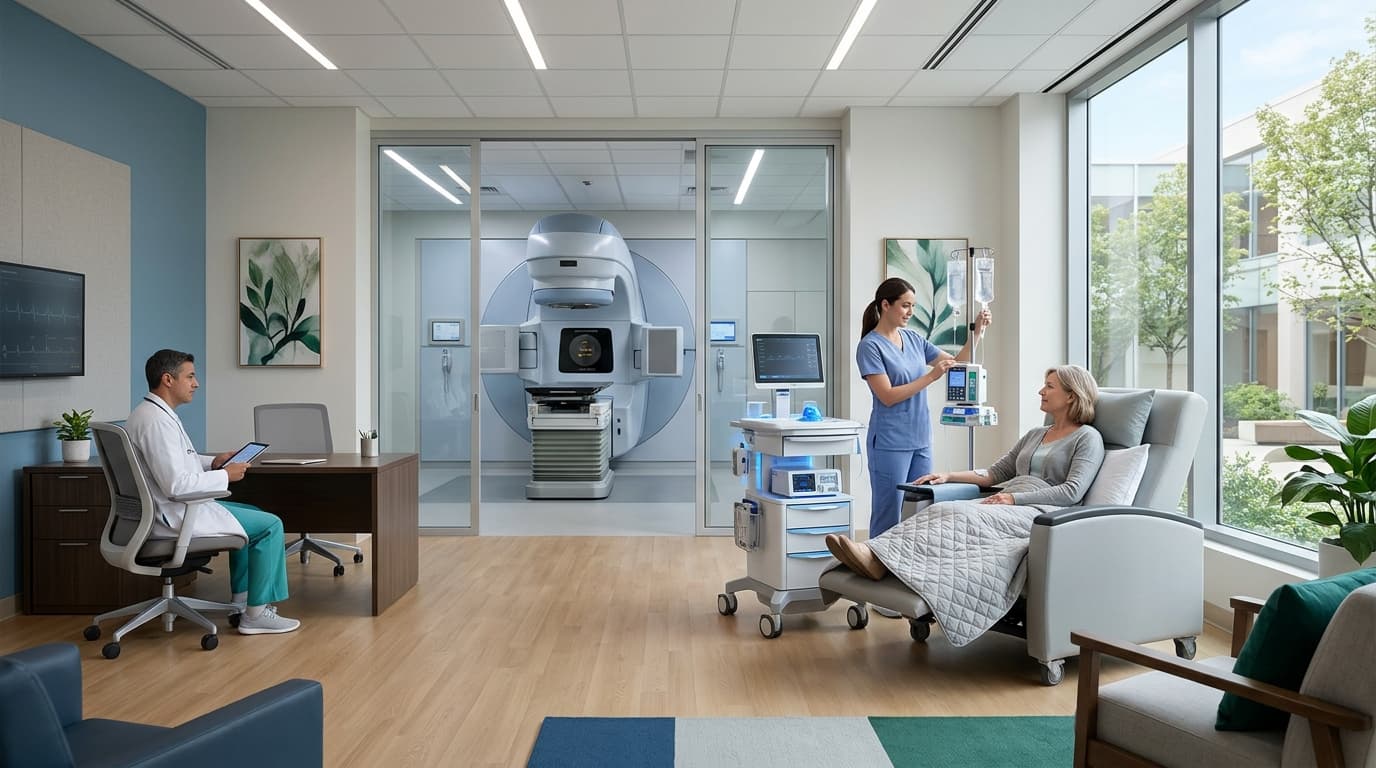
Radiation oncology utilizes ionizing radiation beams (photons, electrons, or charged protons) to induce lethal double-stranded DNA damage inside malignant cells. State-of-the-art technologies—including Intensity-Modulated Radiation Therapy (IMRT), Stereotactic Body Radiotherapy (SBRT/CyberKnife), and Image-Guided Radiation Therapy (IGRT)—allow clinicians to sculpt high radiation doses precisely around tumor contours while sparing neighboring critical organs at risk.
D. Immunotherapy and Targeted Therapies
Perhaps the most revolutionary advance in contemporary oncology is immunotherapy. Immune checkpoint inhibitors (such as anti-PD-1, anti-PD-L1, and anti-CTLA-4 antibodies) unmask cancer cells that evade immune surveillance, unleashing the patient's own cytotoxic T-lymphocytes to recognize and eradicate tumor cells. Simultaneously, small-molecule kinase inhibitors and antibody-drug conjugates (ADCs) deliver lethal payloads directly to cells expressing specific aberrant receptors with remarkable clinical precision.
6. Comprehensive Supportive Care and Quality of Life
True excellence in cancer care extends far beyond tumor eradication. Managing treatment-related toxicities and supporting the holistic physical and emotional needs of patients is paramount:
- Management of Emesis: Advanced neurokinin-1 (NK1) and 5-HT3 receptor antagonists have transformed chemotherapy-induced nausea and vomiting into a highly preventable complication.
- Oncology Nutrition: Specialized clinical dietitians help patients maintain lean muscle mass, combat cancer-associated cachexia, and tailor nutrient intake through tailored caloric and protein supplementation.
- Multimodal Pain Management: Utilizing step-wise pharmacological protocols, nerve blocks, and non-pharmacological interventions ensures patients remain pain-free and functional throughout treatment.
- Psycho-Oncology and Emotional Support: Professional counseling, cognitive reframing, and structured support groups help mitigate anxiety, depression, and existential distress for both patients and their families.
7. Cancer Prevention: Modifiable Lifestyle Risk Factors
The World Health Organization reports that 30% to 50% of all cancer diagnoses are preventable through modifiable lifestyle and environmental interventions:
- Tobacco Cessation: Avoiding all forms of tobacco is the single most effective intervention for preventing lung, oral, esophageal, pancreatic, and bladder malignancies.
- Nutritional Balance: Consuming a Mediterranean-style, plant-predominant diet abundant in leafy vegetables, cruciferous vegetables, whole grains, and antioxidant-rich fruits while eliminating ultra-processed foods.
- Regular Physical Exercise: Achieving at least 150 minutes of moderate aerobic activity weekly lowers circulating insulin, reduces systemic inflammation, and stimulates antitumor immune surveillance.
- Viral Immunizations: Timely vaccination against Hepatitis B (preventing primary liver cancer) and Human Papillomavirus (preventing cervical, anal, and head-and-neck cancers).
- Sun Protection: Applying broad-spectrum SPF 30+ sunscreen daily and avoiding artificial tanning beds to prevent cutaneous basal cell carcinoma, squamous cell carcinoma, and melanoma.
8. Frequently Asked Questions in Modern Cancer Care
Q1: Is cancer always hereditary?
No. Only about 5% to 10% of all cancers are caused by inherited genetic mutations passed down through families (such as BRCA1/2 mutations or Lynch syndrome). The remaining 90% to 95% are acquired (somatic) mutations resulting from environmental exposures, lifestyle factors, cellular aging, and random DNA replication errors.
Q2: Does undergoing a biopsy cause cancer to spread?
This is a widespread misconception. Modern diagnostic needle biopsies and image-guided core biopsies are performed using rigorous clinical techniques designed to ensure that tumor seeding along the needle tract is exceedingly rare and clinically inconsequential compared to the vital diagnostic benefits of accurate tissue characterization.
Q3: What is the difference between chemotherapy and immunotherapy?
Chemotherapy directly attacks and kills rapidly dividing cells throughout the body. Immunotherapy, by contrast, does not directly kill cancer cells; instead, it empowers and activates the patient's own immune system (specifically T-cells) to identify, target, and destroy malignant cells.
Q4: How can caregivers best support an oncology patient?
Caregivers provide essential support by assisting with medication scheduling, attending clinical consultations to take detailed notes, encouraging adequate hydration and balanced nutrition, and providing empathetic emotional presence without pressuring the patient to maintain constant false positivity.
9. Conclusion: Walking the Path with Knowledge, Science, and Hope
A cancer diagnosis represents a formidable life event, yet the landscape of modern oncology offers unprecedented reasons for optimism. With daily advancements in genomic profiling, targeted therapeutics, robotic surgery, and compassionate palliative support, more patients are achieving complete remission, prolonged disease-free survival, and excellent quality of life than ever before.
At PneumaCare, we stand committed to delivering evidence-based clinical insights, patient education, and steadfast compassionate support. If you or your loved ones have questions about cancer screening, symptoms, or treatment options, consult our oncology specialists early—because knowledge and early action are your most powerful allies.
Medical Disclaimer: The clinical insights and guidance provided in this article are for informational purposes and should not be used as a substitute for professional medical diagnosis, advice, or treatment. Always seek direct consultation with qualified physicians at PneumaCare.